Cubist Sculpture
in the Met's "The Face of Life: Modern Portraits” Show

“The Face of Life: Modern Portraits” show is up at the Met and is listed as “ongoing” with no announced end date. I’m going to post about it three times. In this post, I’m pointing to the sculptures. The first one I saw was Lee Bul’s Long Tail Halo: CTCS #2 (2024):
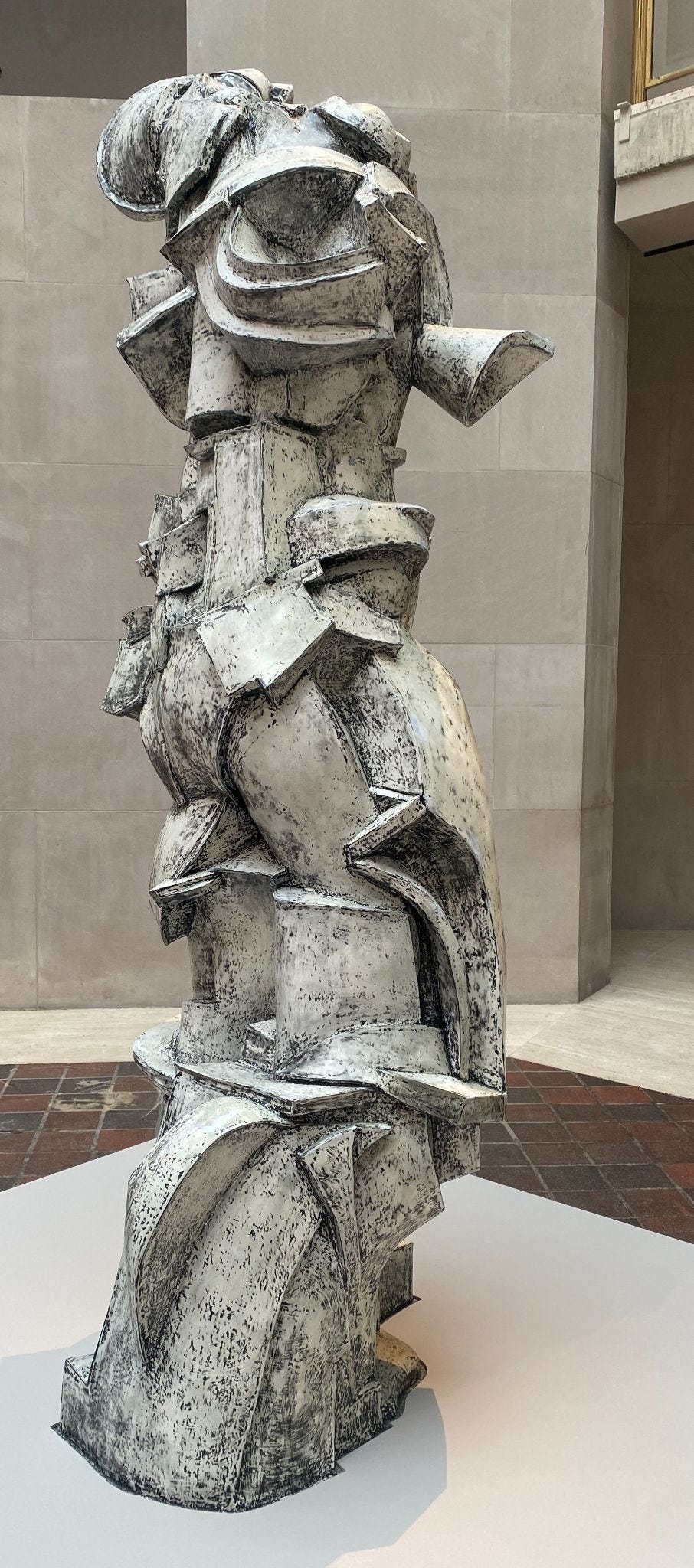
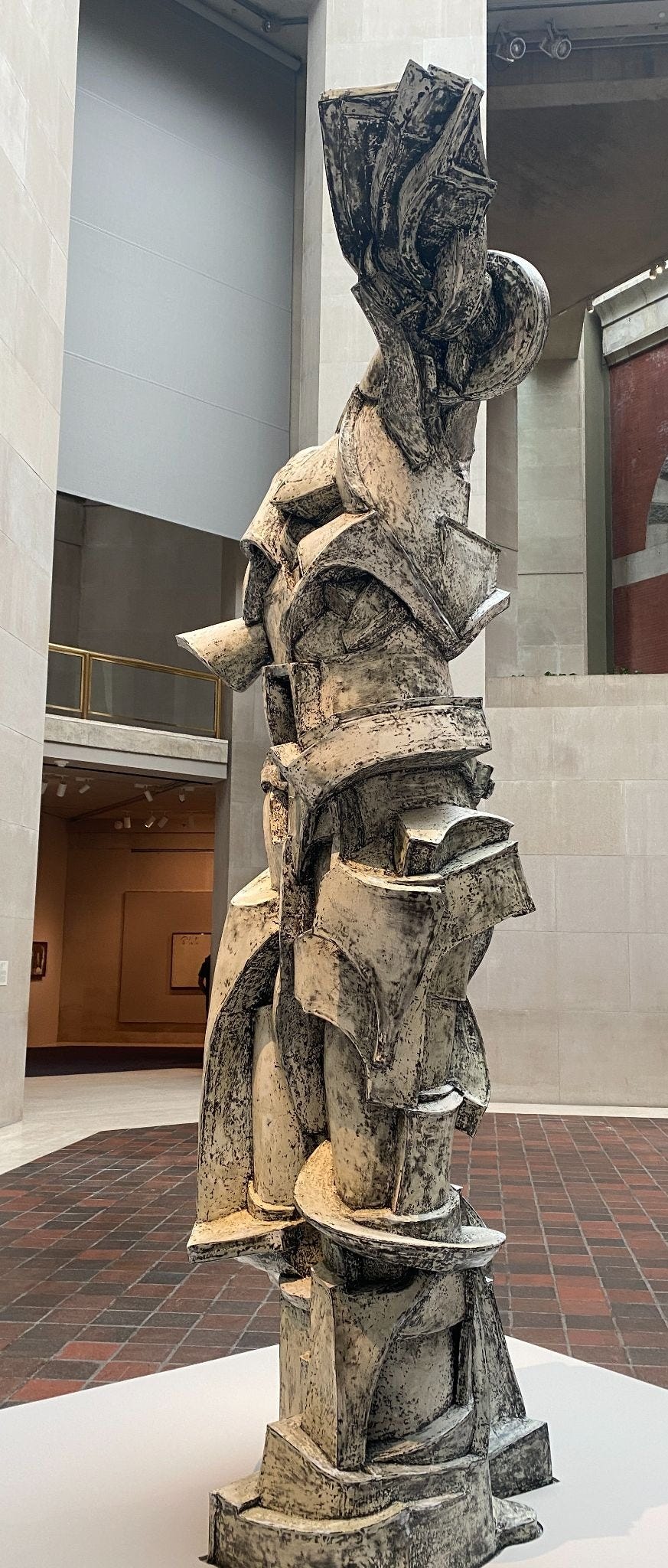
This work is part of a commissioned series of four that gets fuller treatment here (there is a link to an interview with her in the “meet the artist” tab). It was part of the facade of the museum for a while, and has been moved indoors. The other three in the series were “returned to the lender.” Right now, it’s very near this familiar, famous piece by Umberto Boccioni, Unique Forms of Continuity in Space (1913)
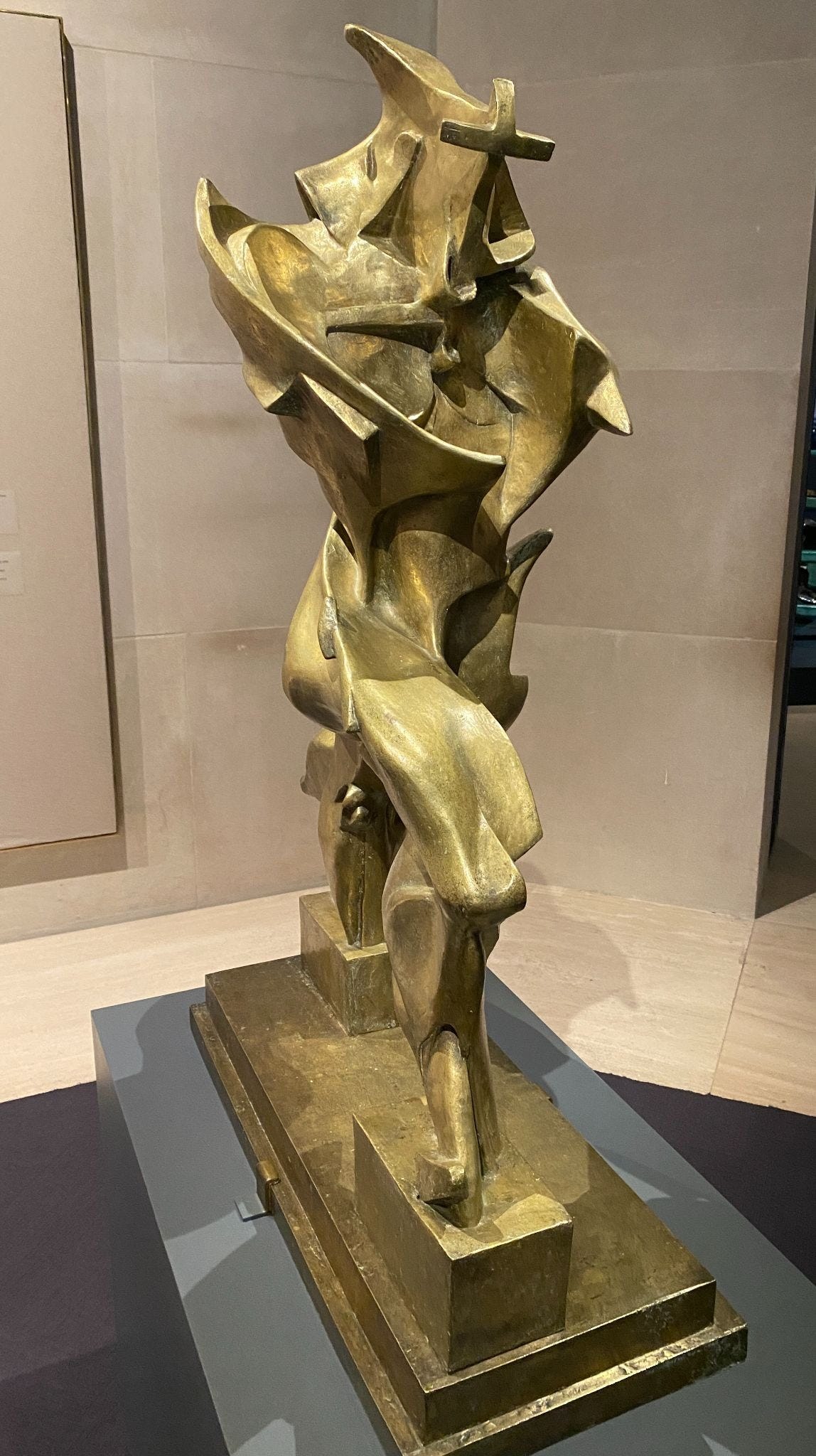
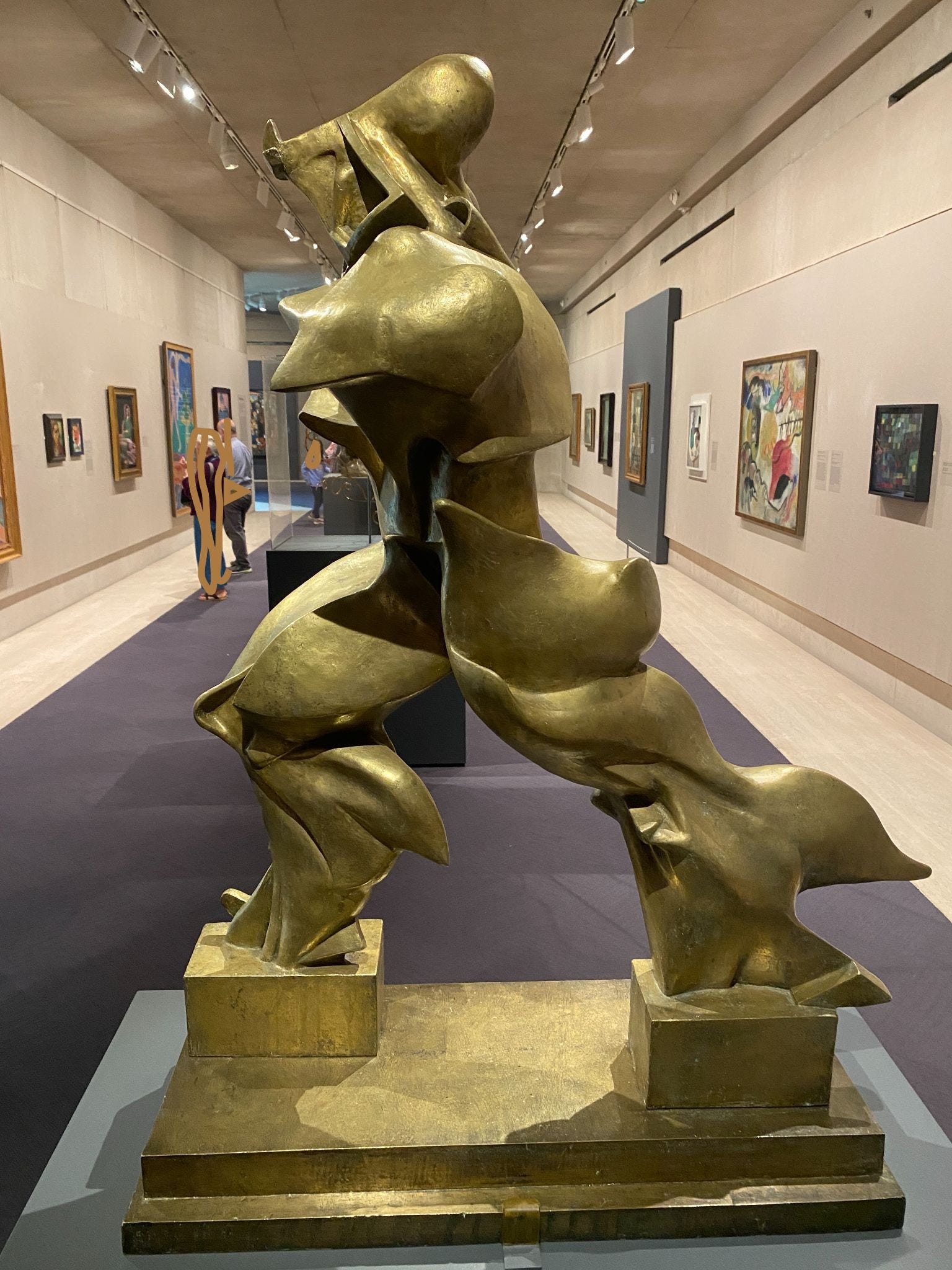
The two pieces seem well-placed near one another, as the newer rhymes with the older. Boccioni’s sculpture seems to flutter in the wind, even as it is utterly solid and heavy. There are recognizable body parts. One can tell where the legs muscles are. Yes, it is a “Cubist” sculpture. It was conceived as such in the period in which Cubism was being made. It’s part of Italian Futurism, but I am not concerned with that here.
Bul’s Halo seems to me also to be a portrait of a human figure, though headless. It is harder to see where the specific body parts are, though I feel that I can see a clothed leg and butt, and a stunted arm (in the vein of the Venus de Milo). Just as some Cubist painting is easier to decipher and some is harder, so is there this difference between these works.
There are two other sculptures I would call Cubist in the show. One is Picasso’s Head of a Woman (Fernande) (1909):
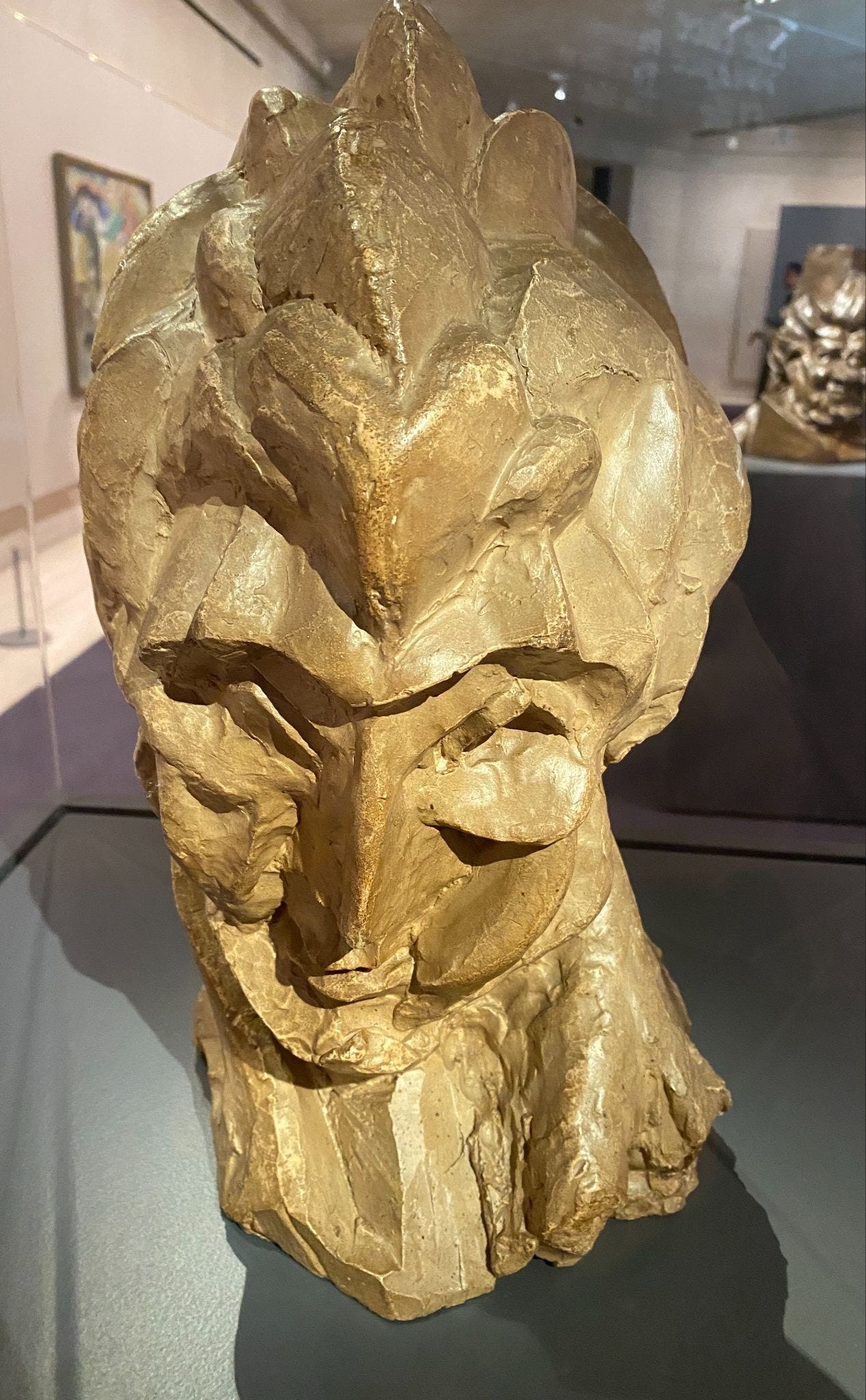
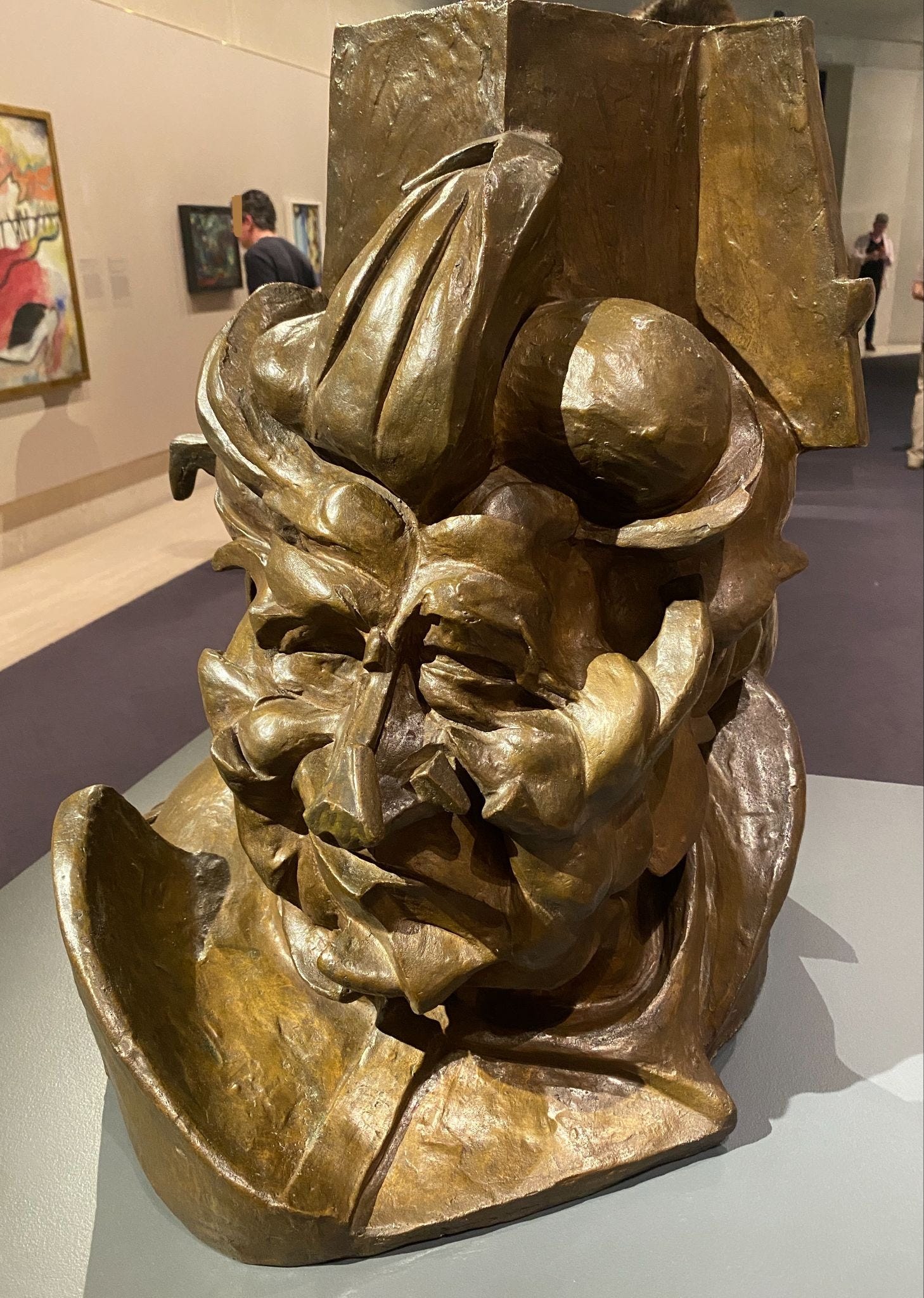
When you get three of these together, one question that could arise is, what’s a Cubist sculpture anyway? Here’s the last one that I’m calling Cubist in this particular show, also by Umberto Boccioni, Antigraceful (1913):
Here is a working definition of Cubism offered by the Tate Museum in the UK: “Cubism was a revolutionary new approach to representing reality invented in around 1907–08 by artists Pablo Picasso and Georges Braque. They brought different views of subjects (usually objects or figures) together in the same picture, resulting in paintings that appear fragmented and abstracted.” What’s confusing, of course, is that this isn’t the only definition. This one comes after more than a century of absorbing the idea of Cubism. The Tate site also tells us that there’s an origin story about the term: “The name ‘cubism’ seems to have derived from a comment made by the critic Louis Vauxcelles who, on seeing some of Georges Braque’s paintings exhibited in Paris in 1908, described them as reducing everything to ‘geometric outlines, to cubes’.” Here’s a third definition (mine): Cubism shows more than one source of light in a landscape, which isn’t different views of the landscape but different moments in time (since the sun changes position). Here’s Georges Braque’s Houses at l’Estaque (1908), one of the earliest Cubist paintings:
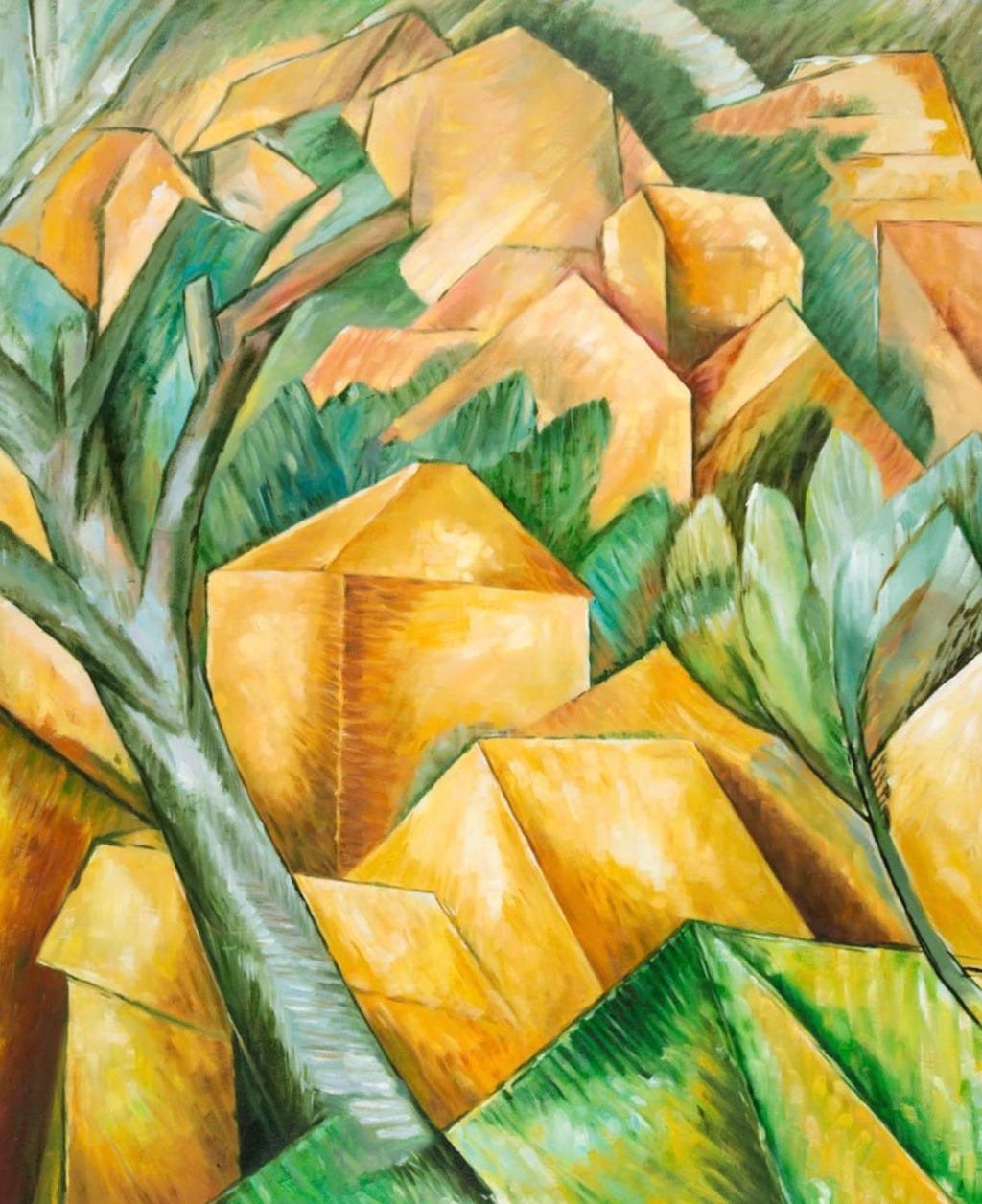
The houses are cubes to show better how the light is not coming from one consistent place. The “cube” element is a convenience in service of this goal about light.
If we think about the sculptures above, they seem to fit the oldest definition best, the one about cubes. A sculpture cannot do the light trick. The light comes from fixtures in the museum; it is non-fictional, whereas the light in a Cubist painting can be fictional and unreal. The sculptures have a lot of cubes and rectangles, however, and break the form into pieces the way that the painting does as well.
There are other sculptures in the modern portrait show, among them this one by Alberto Giacometti, Head-Skull (1934):
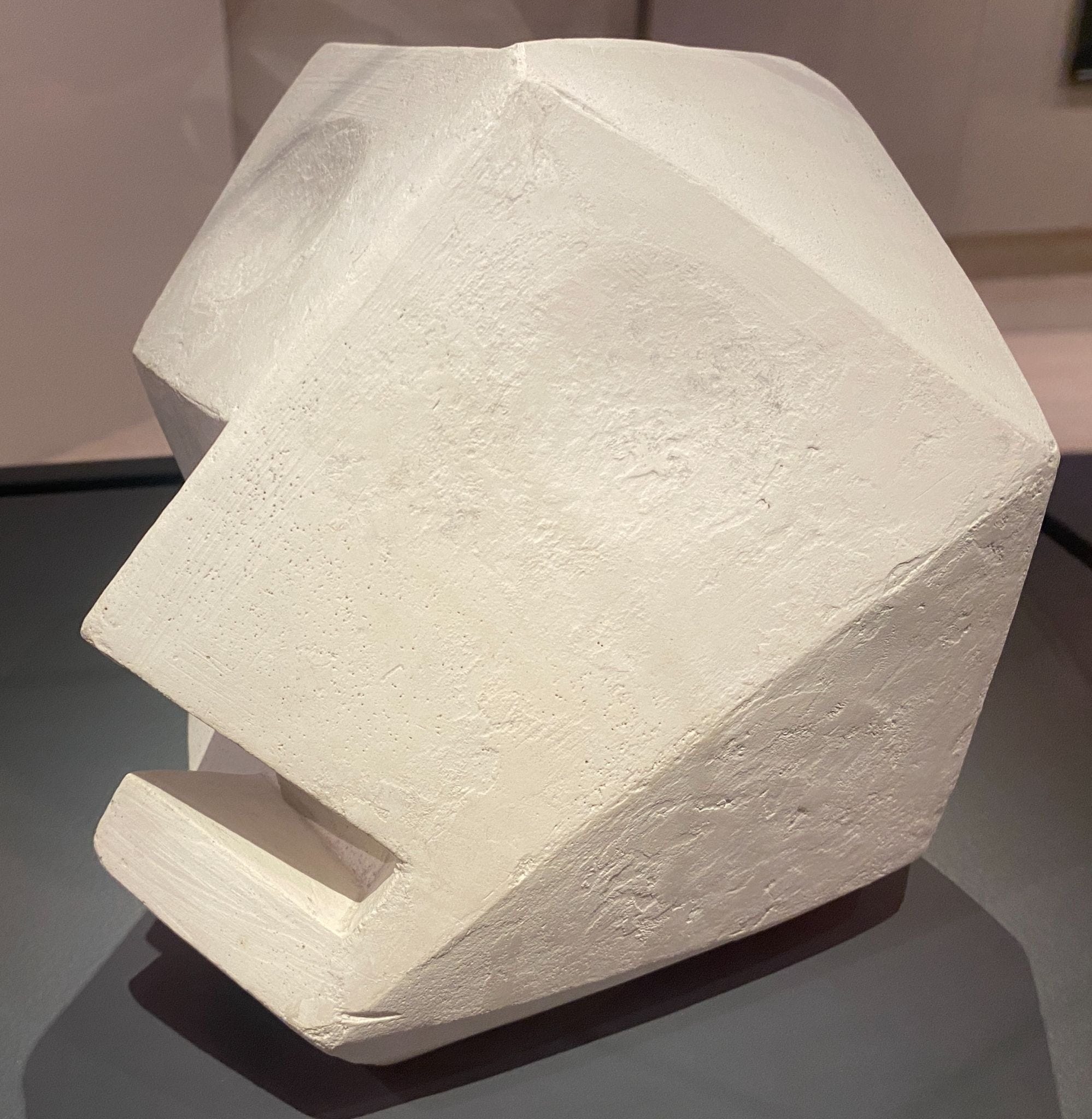
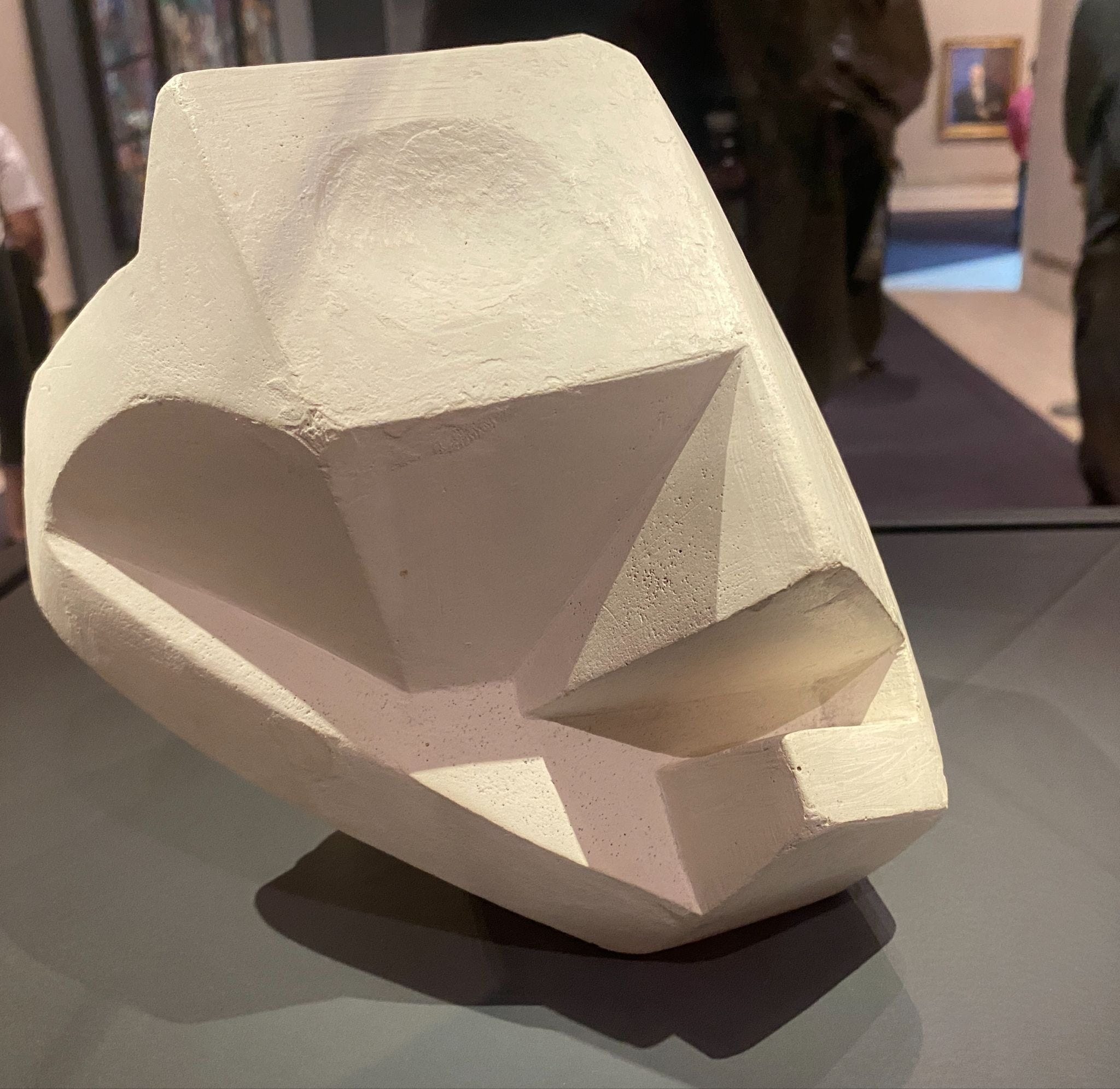
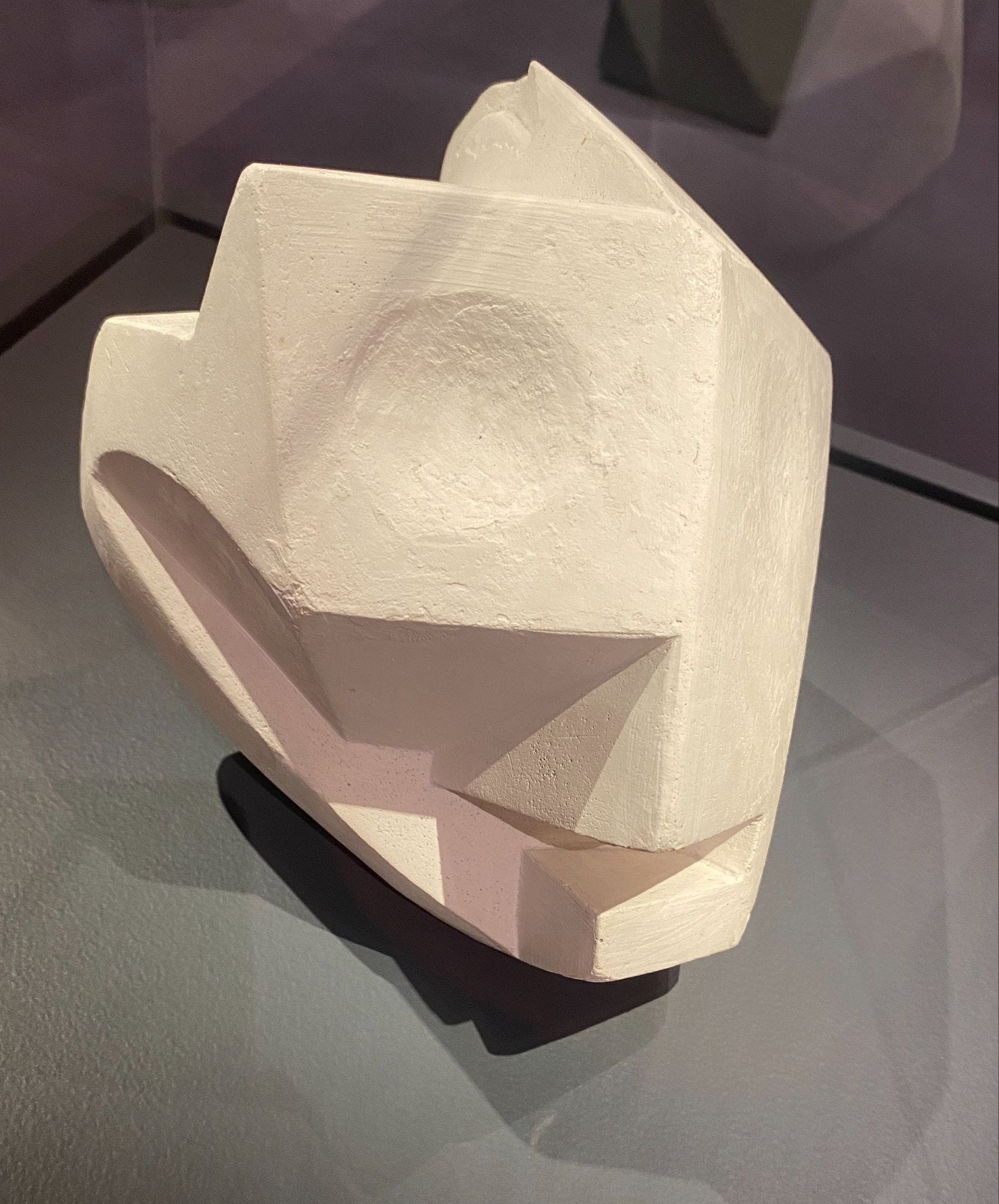
I would not call this Cubist, though I could see an argument for expanding the term to include it. It does not break the head into pieces so much as it depicts the head using simplified planes. I’m not married to this distinction, however.
Defining Cubism is a sticky wicket, for sure. For that matter, defining any art category can always get you in trouble. There's always an exception to the rule. That said, I really cannot agree with your definition. Landscape? When I think of Cubism, landscape is not what comes to mind. With regard to Cubist portraits, sure, you could say that if the subject is moving, then your perspective changes over time. But I find the conventional definition that it is multiple perspectives from the same moment more compelling.
As far as Cubist sculpture is concerned, as you ask, "what’s a Cubist sculpture anyway?" Yeah, it's nothing, except for maybe a visual style. Unless you are looking at sculpture from a single point of view (which flies in the face of the value of sculpture entirely), it really has no relationship to Cubist painting.